How Midjourney V8.2 combined separate image references
Midjourney opened its first V8.2 Edit Model for community testing on August 27, 2026 at 23:32:15 UTC, or August 28 at 08:32:15 in Seoul. A single generation could now draw from up to four separately attached images. One launch graphic shows three sources feeding a single fantasy composition. Another shows a two-reference composition alongside single-reference examples. The text establishes the four-image limit, and the launch graphics demonstrate up to three. The August 31 subreddit announcement repeated the limit and described initial UI changes on the main and Alpha websites. Midjourney announcement · Midjourney archive · Three-reference launch graphic · August 31 announcement
What does the evidence show?
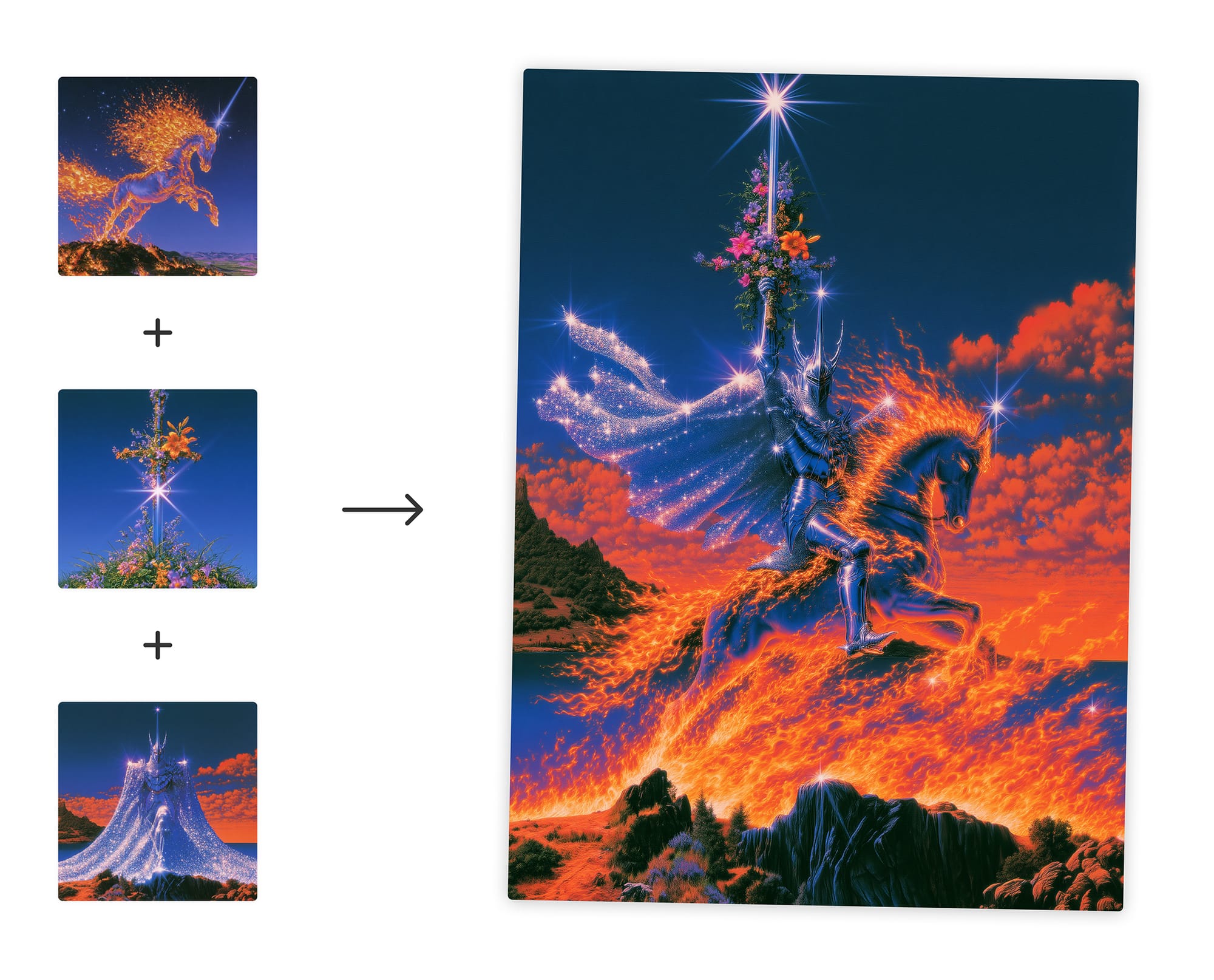
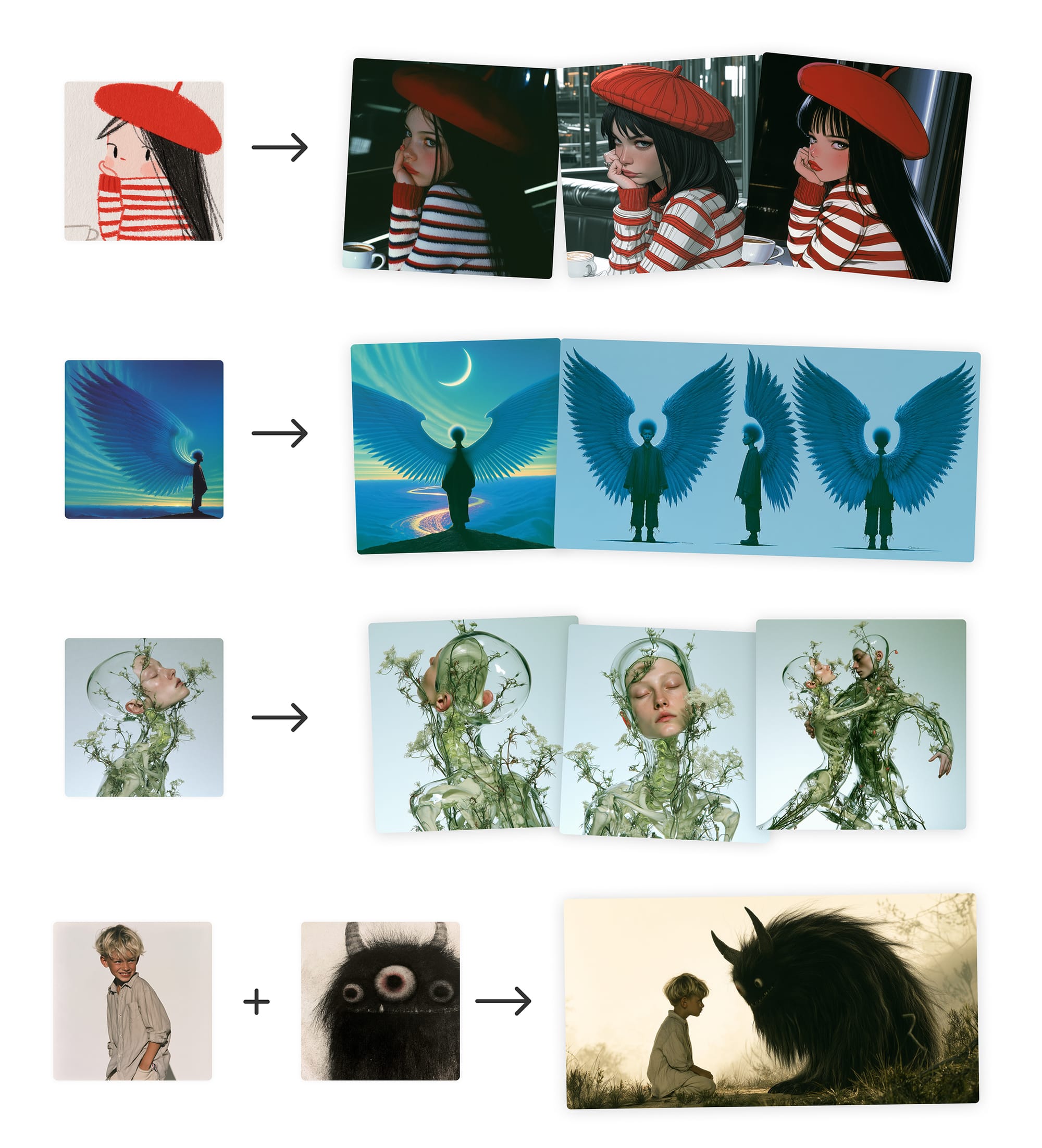
Editing with references
These graphics show reference composition. The announcement describes up to four attachments, while the examples show up to three.
Release announcementThe web workflow accepts separate files in the Imagine bar’s Attach to prompt section, where the lock keeps the selected inputs across runs. Current Discord documentation shows --edit followed by space-separated image URLs. This route generates a new composition, while the canvas Editor supports brush-selected changes and expansion. V7 Omni Reference accepts one file in its subject-reference slot, including a composite file when several subjects need to share that reference. The Edit Model documentation also suggests combining subjects into one reference when character attributes mix. Edit Model workflow · V7 Omni Reference workflow
A book-cover sketch and a separate style image
On September 3, book-cover designer James of GoOnWrite showed tests starting from rough layout sketches. For the two-input composition tests he added a visual styling image to the same Edit Model box as the sketch. He reported that this gave him more control over the result and that placing the styling image in the separate Style Reference box had worked less well in his tests. The same article reports three failed attempts to reposition subjects within an already composed image. Those trials addressed a different task from generating a cover study from separate layout and look inputs. A September 1 Reddit showcase helped inspire the technique, and a September 7 reply linking the article explicitly described dropping both images into Attach to prompt. GoOnWrite’s composition tests · September 1 sketch discussion · September 7 attachment explanation
Two reference views for one recurring character
On October 16, Naoya documented preparing a cast for an AI comedy show. For the human assistant director, Mina, the creator attached a full-body turnaround and a separate face close-up from an existing character. The prompt used the first image for the character and the second for her face and hair, then specified her new black hoodie, headset, staff badge and script. Naoya reported that the result preserved her appearance while changing the wardrobe. The creator then used a new turnaround and close-up as Mina’s fixed pair, keeping them pinned while changing pose or scene. Working through ten characters introduced a practical mistake: the prior pair could stay pinned when moving to another character. This write-up dates a later production workflow with two inputs per generation. Naoya’s original workflow and examples
The published cases show two distinct uses for separate attachments. The cover tests divide composition and visual style across files. The character workflow uses complementary views of one subject. They document selected results and operator decisions. The evidence leaves open how often attributes transfer correctly as the number of attachments increases. GoOnWrite’s composition tests · Naoya’s workflow · Midjourney’s multiple-character guidance